
WORLD NEWS
Ukraine Introduces Largest-Ever Banknote as War, Inflation and Cash Demand Reshape Economy

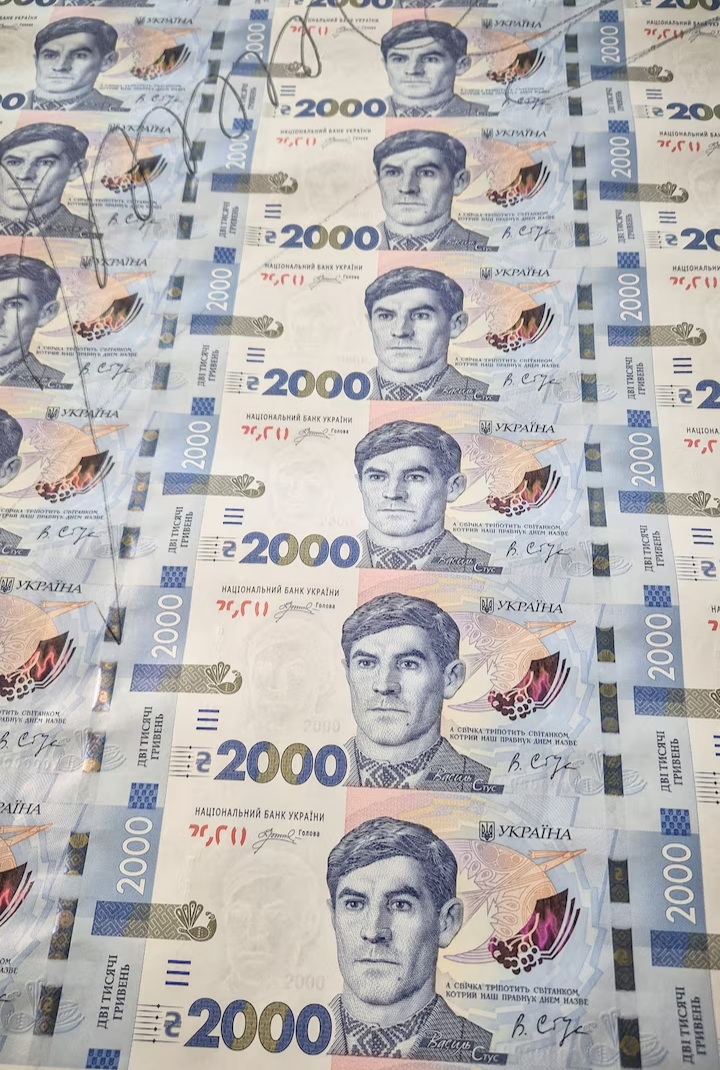
New 2,000-hryvnia note featuring Soviet-era dissident Vasyl Stus to enter circulation as Kyiv strengthens financial resilience amid prolonged conflict
Ukraine’s central bank has announced the introduction of a new 2,000-hryvnia banknote, the largest denomination in the country’s history, as the impact of the ongoing war, rising prices and changing payment patterns continue to reshape the nation’s economy.
The blue-coloured banknote, valued at about $45, will officially enter circulation on September 4, according to Central Bank Governor Andriy Pyshnyi, who unveiled the design at the institution’s heavily secured operational facility within Ukraine’s government district.
The new note carries the portrait of renowned Ukrainian poet, writer and Soviet-era dissident Vasyl Stus, whose life became a symbol of resistance, cultural identity and the struggle for human rights. Stus spent years in Soviet detention because of his activism and defence of Ukrainian national culture.
Presenting the new currency, Pyshnyi said the decision reflects the changing realities of Ukraine’s economy, where inflation, increased cash circulation and wartime disruptions have altered how citizens and businesses conduct financial transactions.
“The economy changes. Income levels, prices, the volume of cash in circulation, and people’s payment behaviour all evolve,” Pyshnyi said.
Cash Remains Critical Despite Digital Payments Growth
Although most commercial transactions in Ukraine are now conducted electronically, the central bank noted that the realities of war have increased the importance of physical cash, especially in frontline communities where damaged infrastructure, unstable communication networks and security challenges can disrupt digital payment systems.
Pyshnyi stressed that a resilient financial system must combine modern digital infrastructure with reliable access to cash.
“Resilience means not only a functioning cashless infrastructure, but also people’s access to cash,” he said.
The move comes as Ukraine’s cash circulation has expanded significantly. Data from the central bank showed that the amount of cash in circulation reached 970 billion hryvnias in early July 2026, compared with about 390 billion hryvnias in 2019 when the 1,000-hryvnia note was introduced.
The 1,000-hryvnia denomination currently represents more than 55 per cent of the total value of banknotes in circulation, a development the central bank said demonstrated the need for a higher-value note.
Currency Adjustment Amid Wartime Economic Pressure
Ukraine’s economy has faced severe pressure since Russia’s invasion, with millions of citizens displaced, major cities and infrastructure damaged, and trade networks, exports and logistics heavily affected.
The central bank said the new denomination would help reduce the cost of transporting and managing cash while improving efficiency in the movement of currency across the country.
However, Pyshnyi reaffirmed that introducing a higher-value banknote does not signal a relaxation of monetary discipline, stressing that the central bank remains committed to controlling inflation and maintaining economic stability.
A Symbol of National Identity
Beyond its economic purpose, the new banknote also carries a strong national message. Parliamentary Speaker Ruslan Stefanchuk described the choice of Vasyl Stus as significant at a time when Ukraine continues to defend its sovereignty and cultural identity.
“This banknote is timely today as it is now when Ukraine is defending its identity,” Stefanchuk said.
The introduction of the 2,000-hryvnia note highlights how wartime economies adapt—not only through military and diplomatic strategies but also through adjustments to everyday financial systems designed to keep societies functioning during prolonged crises.