
SPORTS
FIFA Weighs 64-Team World Cup as Infantino Pushes for Greater Global Inclusion

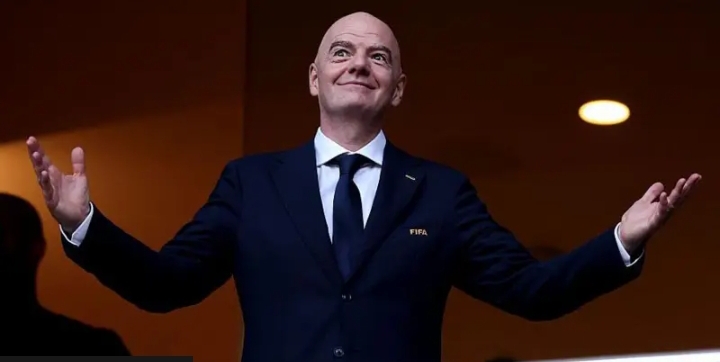
FIFA President Gianni Infantino has confirmed that world football’s governing body will consider proposals to expand the FIFA World Cup to 64 teams, saying the success of the newly introduced 48-team format has strengthened the case for broader global participation.
Speaking in an interview with Swiss broadcaster Blue Sport, Infantino said discussions on further expansion would take place after the conclusion of the 2026 FIFA World Cup.
According to him, the World Cup should reflect the global nature of football by creating more opportunities for nations from every continent to qualify and compete on the biggest stage.
“When organising a World Cup, it’s important to organise it for the whole world—not just Europe and South America, but effectively the entire world. Every nation should be allowed to dream of participating in the World Cup,” Infantino said.
Success of the 48-Team Format
The FIFA president described the expanded 48-team tournament, which debuts at the 2026 World Cup, as a major step toward making football more inclusive.
He pointed to Africa’s improved representation, noting that more African nations are reaching the knockout stages in international competitions, which he believes demonstrates the value of giving more countries the opportunity to compete.
The decision to increase the tournament from 32 to 48 teams was approved by the FIFA Council in 2017 and takes effect at the 2026 World Cup, which will be co-hosted by the United States, Canada and Mexico.
Proposal for a 64-Team Tournament
The idea of expanding the World Cup even further gained momentum after South America’s football governing body, CONMEBOL, formally proposed a 64-team tournament for the 2030 edition.
The 2030 FIFA World Cup will be primarily hosted by Spain, Portugal and Morocco, while Argentina, Uruguay and Paraguay will stage the opening matches to commemorate the tournament’s centenary. Uruguay hosted the inaugural FIFA World Cup in 1930.
Although the proposal remains under consideration, FIFA has not announced any decision on the matter.
Opposition from Football Leaders
The proposal has, however, drawn criticism from several senior football administrators.
Aleksander Čeferin described the idea as a “bad idea,” warning that a larger tournament could undermine both the quality of the World Cup and the integrity of the qualification process.
Similarly, Salman bin Ibrahim Al Khalifa cautioned that further expansion could create “chaos” for international football scheduling.
Concacaf President Victor Montagliani also expressed reservations, arguing that a 64-team competition could negatively affect the broader football ecosystem.
Hosting Challenges and Financial Benefits
Expanding the tournament would significantly increase logistical demands. A 64-team World Cup would likely feature 128 matches, requiring more stadiums, infrastructure, accommodation and transportation than ever before.
Questions have also been raised about whether future hosts, including Saudi Arabia, which is set to stage the 2034 FIFA World Cup, could successfully manage an event of such scale.
Despite these concerns, supporters argue that expansion would allow nearly one-third of FIFA’s 211 member associations to qualify, giving smaller football nations greater exposure and development opportunities.
A larger tournament would also generate additional broadcasting, sponsorship and commercial revenue, enabling FIFA to distribute more financial support to its member associations worldwide.
For now, FIFA says it will continue consulting stakeholders before any formal decision is taken. While no immediate expansion has been approved beyond the 48-team format, the debate over the future size of football’s biggest tournament is expected to remain a major topic in global football governance.