BUSINESS
Dangote Refinery Dumps Naira for Dollar Pricing as Petrol Now Sells at $0.779 Per Litre

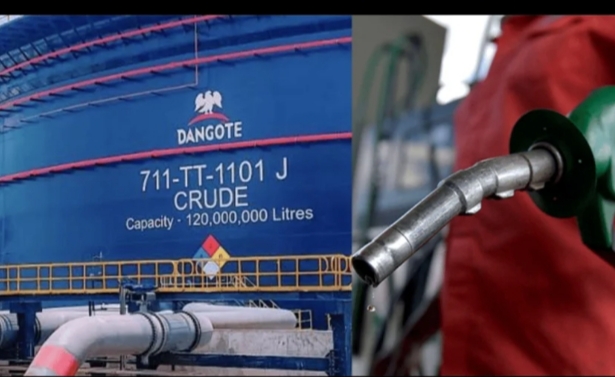
Dangote Petroleum Refinery has officially commenced the sale of Premium Motor Spirit (PMS), popularly known as petrol, in United States dollars, marking a significant shift in Nigeria’s downstream petroleum market.
Under the new pricing template, which took effect on Monday, July 13, 2026, the refinery fixed the ex-depot price of petrol at $0.779 per litre, while Automotive Gas Oil (diesel) now sells at $1.087 per litre and aviation fuel at $0.942 per litre. Coastal deliveries of petrol have also been priced at $1,044.62 per metric tonne.
The development effectively ends naira payments for petrol, diesel and aviation fuel purchased from the refinery, reversing the naira-based transaction model introduced under the Federal Government’s naira-for-crude policy, which began on October 1, 2024.
In a notice issued to petroleum marketers and customers, the refinery announced that all previously issued naira-denominated Proforma Invoices (PFIs) and Deal Recaps for both gantry and coastal transactions had become invalid.
According to the notice signed by the refinery’s Group Commercial Operations, customers were instructed not to make payments using the old naira invoices, as all transactions for the affected products will now be conducted in US dollars.
The refinery, however, clarified that the new pricing arrangement does not apply to Liquefied Petroleum Gas (LPG), which will continue under its existing payment structure.
Why the Change?
Industry sources attributed the decision to the growing mismatch between the currency used to purchase crude oil and the currency used to sell refined petroleum products.
Although the refinery previously benefited from the Federal Government’s naira-for-crude initiative, recent crude oil supplies from the Nigerian National Petroleum Company Limited (NNPCL) have increasingly been denominated in US dollars.
According to industry insiders, Dangote Refinery has recently received fewer crude cargoes under the naira-for-crude arrangement while continuing to sell a substantial portion of its refined products in naira. This exposed the refinery to foreign exchange risks amid fluctuating exchange rates and volatile international crude oil prices.
Aligning refined product sales with the currency used to procure crude oil, analysts say, is aimed at reducing exchange-rate losses and improving commercial sustainability.
What It Means for Nigerians
The refinery’s decision is expected to have significant implications for petroleum marketers, who depend heavily on Dangote Refinery for nationwide fuel distribution.
While the refinery has adopted dollar-denominated pricing, the retail pump price paid by consumers will still depend on several variables, including:
The prevailing naira-to-dollar exchange rate.
International crude oil prices.
Transportation and logistics costs.
Regulatory charges.
Marketers’ operating costs and profit margins.
The transition also raises fresh concerns about the future of the Federal Government’s naira-for-crude policy, which was designed to support local refining, reduce pressure on Nigeria’s foreign exchange market and promote more stable fuel prices.
With Dangote Refinery supplying a substantial share of Nigeria’s refined petroleum products, industry stakeholders are expected to closely monitor how the new pricing regime affects fuel prices, market competition and the broader economy in the coming weeks.
Bottom Line
Dangote Refinery’s decision to price petrol, diesel and aviation fuel in US dollars represents one of the most significant changes in Nigeria’s downstream oil sector since fuel market deregulation. While the move is expected to help the refinery manage foreign exchange risks, its long-term impact on fuel prices, marketers and consumers will largely depend on exchange rate stability and the Federal Government’s next steps regarding the naira-for-crude policy.
