
POLITICS
2027: Arochukwu/Ohafia Must Judge Leaders by What They Attract, Not Who Shouts Loudest

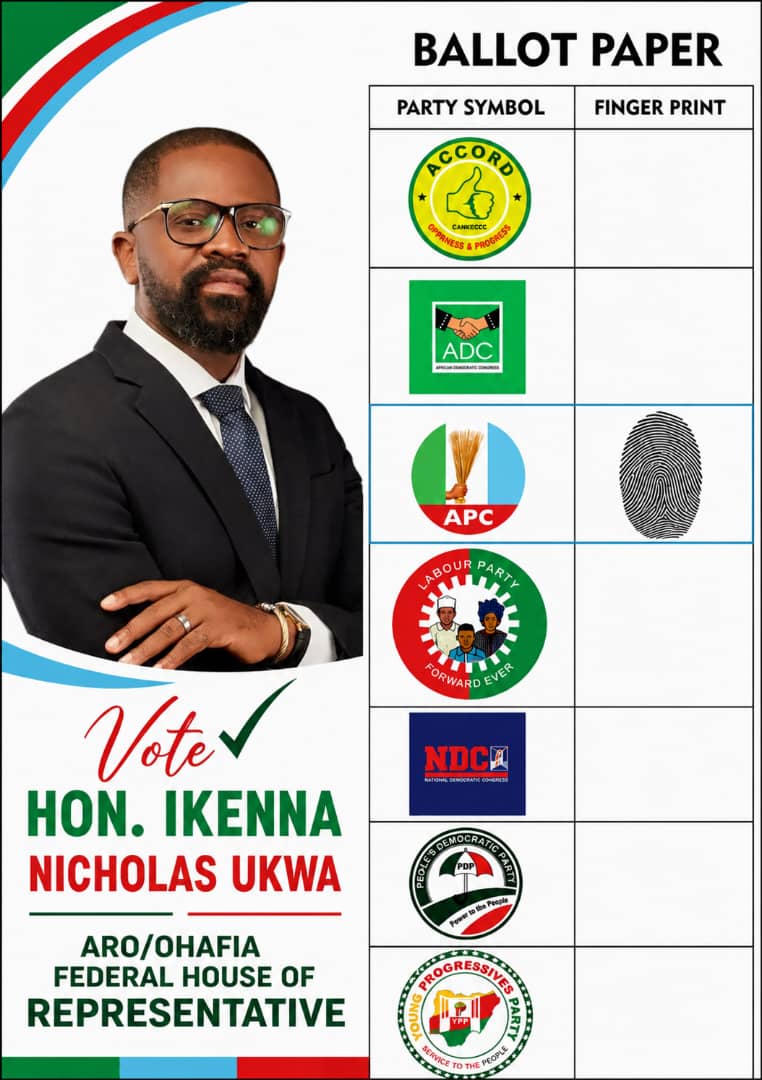
As political activities gradually gather momentum ahead of the 2027 general elections, the people of Arochukwu/Ohafia are once again being confronted with competing narratives about representation, performance and development.
But beyond the noise of social media arguments, propaganda and political accusations, there is a more important conversation that deserves the attention of the electorate: What tangible development has each political actor helped bring to the people?
The questions are simple.
Where are the projects?
Who attracted them?
Which communities benefited?
What was the value of the projects?
Were the contractors paid?
Were the projects completed?
And, most importantly, what impact are they having on ordinary people?
These are the questions that should define political evaluation in Arochukwu/Ohafia—not who can produce the loudest social-media commentary.
Government Funding Does Not Cancel Political Facilitation
One argument that has increasingly featured in political discussions is the claim that a legislator cannot take credit for a project because the project was funded by a government agency.
That argument requires a more nuanced understanding of how public representation works.
There is an important distinction between funding a project and facilitating its attraction.
A government agency may provide the funds and execute a project, but representatives and political stakeholders can identify community needs, lobby relevant agencies, submit requests, follow up on approvals and push for government interventions to reach particular communities.
There is nothing inherently contradictory about acknowledging such facilitation.
Indeed, representatives routinely communicate government interventions to their constituents. The line that should not be crossed is the deliberate misrepresentation of public funds as personal money.
Therefore, if there is evidence that Hon. Ikenna Ukwa falsely claimed ownership of projects funded by the Niger Delta Development Commission (NDDC) or another government institution, such evidence should be produced.
Let the facts speak.
Let the documents be examined.
Let the public determine whether the claims were accurate.
Political accusations should not become substitutes for evidence.
On the other hand, where available evidence demonstrates that Hon. Ikenna Ukwa facilitated or attracted government interventions to communities within Arochukwu/Ohafia, that contribution should be acknowledged for what it is: facilitation of public development, not personal ownership of public funds.
And What About the Legislator Who Attracts Nothing?
There is another uncomfortable question that should not be avoided.
If one representative is actively engaging government agencies, stakeholders and relevant institutions to attract roads, classrooms, healthcare interventions, streetlights and other development projects, while another has little or nothing tangible to point to, should the electorate simply celebrate silence?
Representation is about more than occupying a seat in the National Assembly.
Attendance matters. Legislative participation matters. Motions, bills and oversight responsibilities matter. But so do constituency engagement, advocacy, intervention and the ability to connect communities with opportunities available through government institutions.
A legislator’s responsibility is ultimately to represent the interests of the people.
Where communities have pressing infrastructure and development needs, an effective representative should be expected to identify those needs and pursue legitimate avenues through which government can respond.
Therefore, if one political actor can demonstrate a verifiable record of attracting interventions while another cannot point to comparable achievements, the debate should be about performance, capacity and results.
It should not be reduced to arguments over who paid a contractor.
Let the Projects Speak
The people of Arochukwu/Ohafia are capable of making informed judgments.
They understand the difference between a government-funded project and the individual or institution that helped bring that project to their community.
If a classroom has been constructed, let the classroom speak.
If streetlights have been installed, let the beneficiaries testify.
If a road intervention has been delivered, let the community assess its impact.
If a healthcare facility has received an intervention, let the people who use it tell their story.
And if Hon. Ikenna Ukwa played a role in facilitating such interventions, that contribution should neither be exaggerated nor deliberately erased.
There is no contradiction in saying that government funded and executed a project while a representative helped attract it to a particular community.
Both facts can be true at the same time.
2027 Should Be About Evidence, Not Noise
As 2027 approaches, Arochukwu/Ohafia deserves a political culture that places evidence above propaganda and measurable results above social-media theatrics.
Every aspirant and incumbent should face the same questions:
What have you done?
What have you attracted?
Which communities have benefited?
What impact can be independently verified?
What problems did you help solve?
Why should the people trust you with another mandate?
These are fair questions for every political actor, regardless of party affiliation or personal popularity.
The people should not be compelled to choose between competing narratives. They should be given the opportunity to examine records, visit projects, speak to beneficiaries and assess the measurable impact of representation.
Arochukwu/Ohafia deserves leaders who do more than make speeches.
It deserves leaders who engage institutions, pursue opportunities, attract legitimate interventions, advocate for their constituents and leave behind tangible evidence of service.
Ultimately, development should not be judged by who shouts the loudest on social media. It should be judged by what the people can see, verify and feel in their communities.
Come 2027, the electorate should let the evidence—not the noise—make the argument.
—Ikenna Ukwa Media Team