
NEWS
Oil Shock Looms: Donald Trump Warns Iran as Strait Disruption Threatens Global Economy

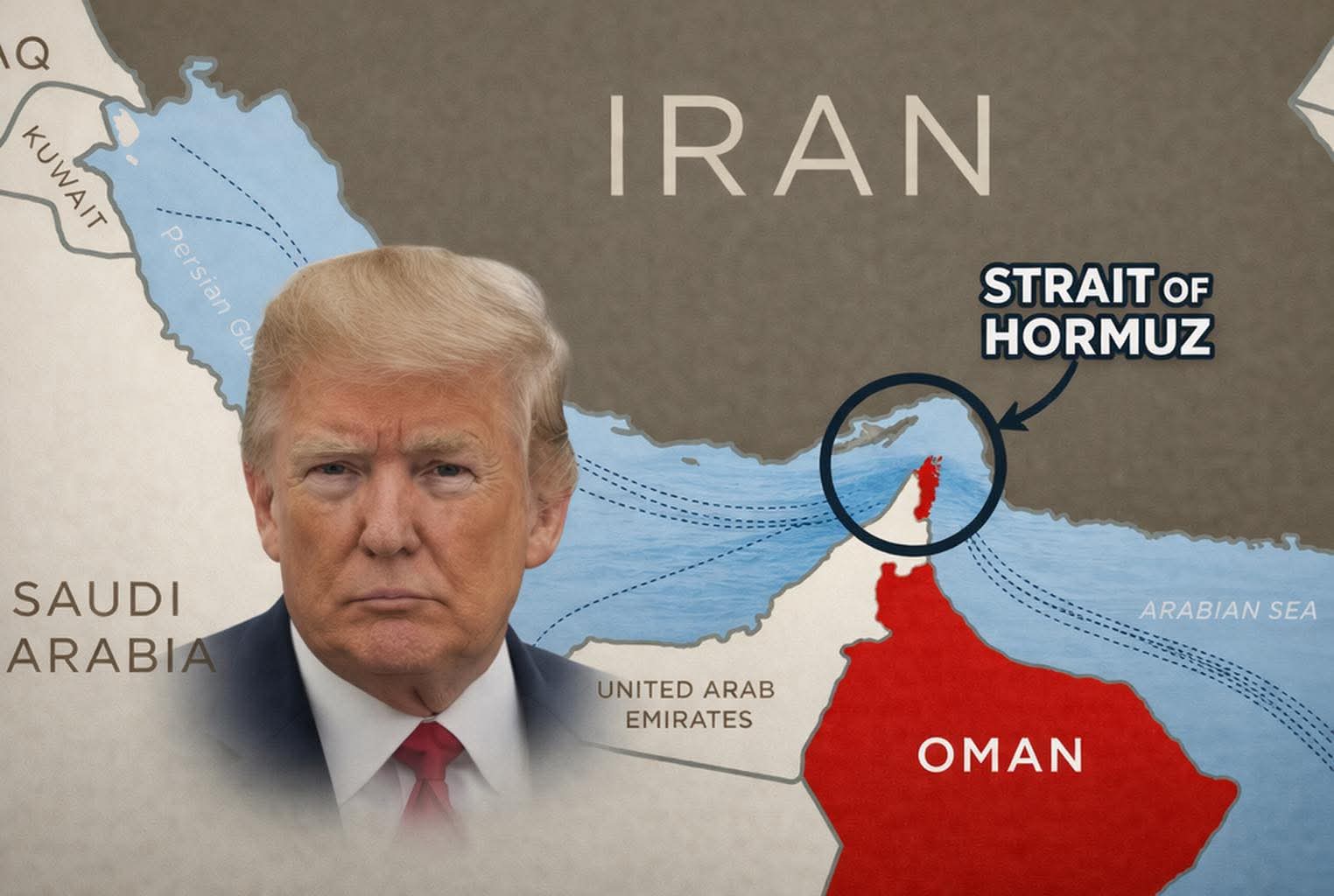
Over three weeks into the conflict involving Iran, the crisis continues to deepen, with global attention now fixed on its economic consequences. Despite early pressure from the United States aimed at forcing political change, Iran’s leadership remains intact and is leveraging a critical global asset to assert its influence.
That asset is the Strait of Hormuz—a narrow but essential maritime corridor separating Iran from Oman. This route is the primary exit point for crude oil shipped from the Gulf region to international markets, making it one of the most strategically important waterways in the world.
Oil exports from Saudi Arabia, Iraq, Qatar, Kuwait, Bahrain, and the United Arab Emirates depend heavily on this passage. Prior to the crisis, about 20 million barrels of oil moved through the strait each day—roughly a fifth of global seaborne supply.
Although alternative land pipelines exist, they cannot handle the same volume, leaving global energy supply highly dependent on uninterrupted access through the strait.
Since the conflict began, Iran has interfered with maritime traffic in the area. While officials maintain that the strait remains partially open, access is now restricted. Ships connected to countries such as China, India, and Turkey are reportedly permitted under certain conditions, whereas vessels linked to rival nations have faced drone and missile attacks. Some ships have been damaged, with reports of casualties, though full details remain unclear.
The heightened risk has led many shipping companies to reroute or suspend operations in the area, drastically reducing traffic. This has already triggered a surge in global oil prices, with Brent crude climbing above $100 per barrel, compared to under $70 before the crisis. The increase is beginning to ripple through economies worldwide, as higher fuel costs push up transportation expenses and the prices of goods and services.
In a significant escalation, Donald Trump has issued a 48-hour ultimatum demanding that Iran fully restore access to the strait. He warned that failure to comply could result in U.S. strikes targeting critical infrastructure, including power systems. Iran has rejected the demand, warning that any attack would be met with a strong response.
With no ongoing diplomatic efforts and tensions continuing to rise, the situation remains highly unstable, raising fears of a wider and more dangerous confrontation.