
WORLD NEWS
Sweden Moves to Fix Major Intelligence Blind Spot After Misjudging Putin’s Ukraine War

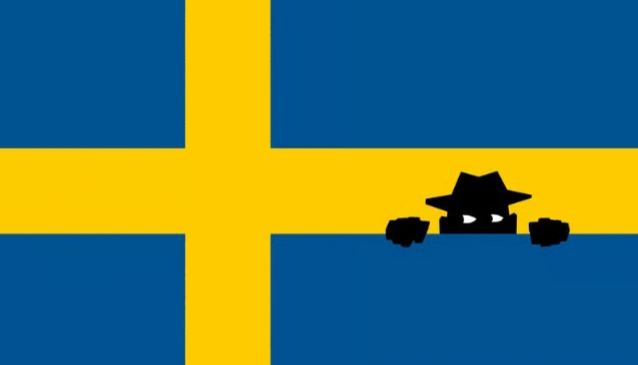
Sweden is overhauling its intelligence architecture after one of the most consequential misjudgments by its security establishment in recent years: underestimating the likelihood that Russian President Vladimir Putin would launch a full-scale invasion of Ukraine.
In the months before Russia invaded Ukraine in February 2022, American and British intelligence agencies repeatedly warned that Moscow was preparing for a major military operation. But some European intelligence services remained unconvinced.
Among the sceptics was Sweden’s military-intelligence service, MUST, which had built a reputation for its expertise in analysing Russia’s military capabilities and intentions. Like intelligence officials in France and Germany, Swedish officials reportedly considered a full-scale invasion too risky and irrational for Putin to pursue.
The war proved them wrong.
Now, Sweden is seeking to ensure that such a strategic miscalculation does not happen again.
The Swedish government has announced plans to establish a new civilian intelligence agency, the Utrikesunderrättelsetjänsten (UND), or Foreign Intelligence Service. The proposed agency is expected to function in a role broadly comparable to Britain’s Secret Intelligence Service, MI6.
Unlike MUST, which operates within Sweden’s military intelligence structure, UND would be a civilian organisation focused on foreign intelligence. It would operate alongside MUST while taking over some of its existing responsibilities.
One of the most sensitive areas expected to come under the new agency is the Special Collection Office, a little-known unit involved in covert intelligence operations and activities involving agents abroad.
Swedish Foreign Minister Maria Malmer Stenergard has described the initiative as part of a broader effort to strengthen the country’s ability to gather and assess intelligence in an increasingly uncertain international environment.
The proposal is expected to go before Sweden’s parliament, with lawmakers scheduled to consider it on August 13 ahead of the country’s September general election. If approved, the new intelligence service is expected to begin operations in January.
Learning From the Ukraine War
Sweden’s decision underscores one of the most difficult challenges facing intelligence agencies: knowing not only what an adversary is capable of doing, but also accurately judging what it is actually prepared to do.
In the case of Russia, Western intelligence agencies had access to substantial information about Moscow’s military preparations before the invasion. The challenge for some European governments was interpreting those signals and determining whether Putin would ultimately take the enormous political, military and economic risks associated with a full-scale war.
That experience appears to have influenced Sweden’s decision to separate civilian foreign intelligence from military intelligence.
The new arrangement could provide Stockholm with a more specialised structure for collecting intelligence abroad, recruiting and managing foreign sources, and assessing threats beyond Sweden’s borders.
A New Era for Swedish Intelligence
The proposed UND comes at a historic moment for Sweden’s national security policy.
Russia’s invasion of Ukraine fundamentally altered the European security landscape, prompting Sweden to abandon decades of military non-alignment and join NATO.
The creation of a dedicated civilian foreign-intelligence service therefore represents more than an administrative adjustment. It signals Sweden’s recognition that the country’s security challenges now require a broader and more sophisticated intelligence capability.
For Stockholm, the objective is clear: avoid being caught off guard again.
The real test, however, will not simply be whether Sweden establishes another intelligence institution. It will be whether UND can provide decision-makers with timely, independent and accurate assessments—even when those assessments challenge prevailing assumptions.
The lesson from 2022 is perhaps the simplest one: intelligence agencies can collect vast amounts of information, but the value of intelligence ultimately depends on how accurately leaders interpret the warning signs.
Sweden now wants to make sure it is better prepared the next time those warning signs appear.