
WORLD NEWS
Trump Suggests Tariffs Over Canadian Wildfire Smoke, Presses Carney for Stronger Fire Control

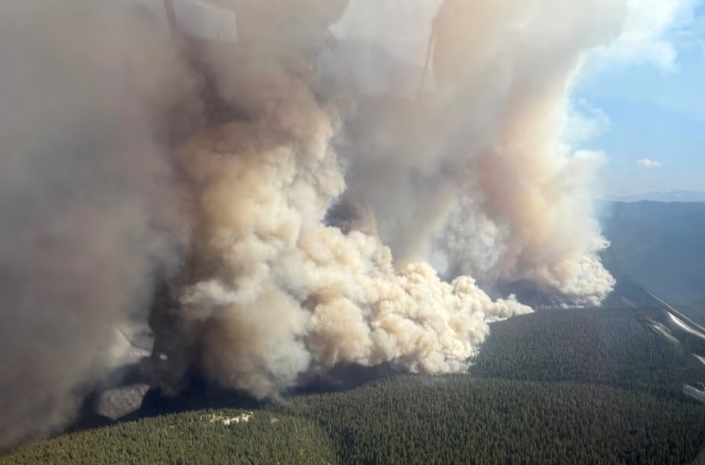
U.S. President Donald Trump has renewed pressure on Canada over the massive Ontario wildfires, suggesting that the country could face additional tariffs if it fails to better control the fires whose smoke has blanketed several American states.
Speaking to reporters on Sunday after attending the FIFA Club World Cup final in New Jersey, Trump revealed that he discussed the issue directly with Canadian Prime Minister Mark Carney, whom he met during the sporting event.
While describing his relationship with Carney as positive, Trump insisted that Canada needed to take stronger action to contain the devastating wildfires.
“I have a good relationship with Mark Carney, but we’ve got to stop the fires up there,” Trump said. “Maybe they should pay us some damages or something, or we should do some tariffs.”
The comments came just a day after Trump threatened to impose fresh tariffs on Canadian goods, arguing that smoke from the Ontario wildfires has negatively affected air quality across parts of the United States.
Wildfire Smoke Spreads Across the U.S.
Smoke from hundreds of active wildfires in Ontario has drifted across a broad stretch of the United States, affecting communities from the Midwest to the Northeast and Mid-Atlantic regions.
Beginning last Thursday, health authorities in several states issued air quality alerts, urging residents—particularly children, older adults, and those with respiratory conditions—to remain indoors whenever possible as hazardous smoke reduced air quality.
Canada Intensifies Firefighting Efforts
Prime Minister Mark Carney’s office did not immediately respond to Trump’s latest remarks.
However, in a post on X a day earlier, Carney highlighted Canada’s ongoing efforts to combat the wildfire crisis. He said more than 5,300 firefighters have been deployed nationwide, with authorities also using advanced thermal imaging technology and real-time data to improve wildfire detection and suppression.
According to official Canadian government figures, approximately 5.9 million acres (2.4 million hectares) have already burned during this year’s wildfire season, making it one of the country’s most severe fire outbreaks in recent years.
Climate Change Driving More Extreme Wildfires
Climate scientists continue to warn that rising global temperatures are increasing both the frequency and intensity of wildfires worldwide. Hotter weather, prolonged droughts, and changing weather patterns have created conditions that allow fires to spread faster, burn longer, and produce smoke capable of traveling thousands of miles across international borders.
Trump’s remarks add a new political dimension to an already serious environmental crisis, raising the prospect that cross-border air pollution could become another point of tension in U.S.-Canada relations if wildfire conditions continue to worsen.