
WORLD NEWS
Modi Offers Forgiveness to Protesters Who Abused Him as Youth-Led Uprising Tests His Government

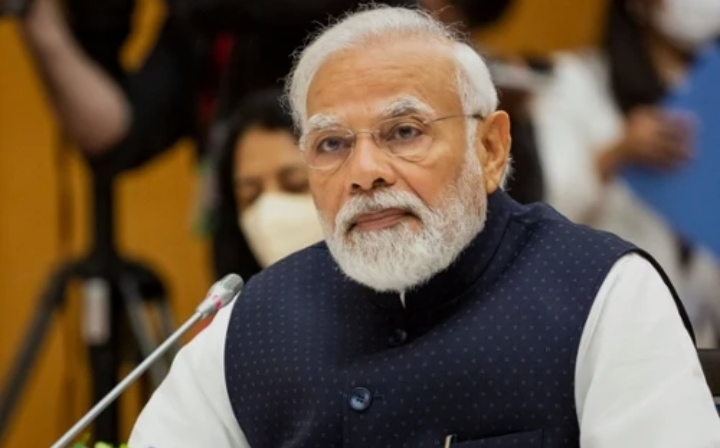
Indian Prime Minister Narendra Modi has offered to forgive young protesters who hurled insults at him and made derogatory remarks about his late mother during recent demonstrations, signalling a softer approach to a protest movement that has emerged as a rare political challenge to his government.
The remarks came after the online Cockroach Janta Party (CJP) mobilised thousands of young people in New Delhi and other Indian cities in protests initially sparked by anger over examination paper leaks.
What began as a campaign against alleged failures in the education system soon developed into a broader expression of frustration over unemployment, governance and the direction of the country, putting increasing pressure on Modi’s administration and culminating in the resignation of Education Minister Dharmendra Pradhan.
At the centre of the controversy were videos circulated widely online showing some protesters directing abusive language at the prime minister. The protesters subsequently faced online attacks from Modi supporters, while police complaints were reportedly filed against some of those involved.
Indian authorities have also approached social media platforms, including Meta and X, seeking the removal of content they described as abusive or manipulated and targeted at the prime minister.
But Modi has now chosen a markedly conciliatory tone.
In a video posted on Instagram late Friday, the 75-year-old prime minister acknowledged the abusive remarks made during the demonstration at Jantar Mantar, while appealing for forgiveness and understanding.
He said some young protesters had used language that had no place in a civilised society and that the insults had extended beyond him to his late mother.
Rather than advocating punishment, Modi said youthful mistakes should be corrected through guidance and counselling, particularly in cases where young people may have acted without fully appreciating the consequences of their actions.
The intervention could represent an important attempt by the prime minister to de-escalate tensions with a generation that has increasingly turned to social media to express dissatisfaction with government policies.
The battle for India’s young digital audience
Perhaps more significant than the protests themselves is the growing battle for influence on social media.
Since the demonstrations began, Modi has increasingly used Instagram to communicate directly with young Indians — the same digital space where the CJP has built much of its support.
The contrast in online reach is striking. According to the figures cited in the report, Modi’s ruling party has about 9.6 million Instagram followers, while the CJP, despite being launched only in May, has amassed more than 26 million followers.
That disparity underscores how quickly a youth-focused political movement can build an audience outside traditional political structures.
For Modi, the challenge is therefore not simply about containing street protests. It is also about winning back the attention and confidence of young people online.
From examination leaks to a wider political message
The protests demonstrate how a single grievance can evolve into a much larger political movement.
Examination paper leaks provided the immediate trigger, but anger over the issue quickly became intertwined with concerns about unemployment, opportunities for young people and governance.
The resignation of the education minister further elevated the political significance of the protests, suggesting that the movement had moved beyond an isolated education-sector dispute.
Modi’s decision to speak directly to the protesters could consequently be viewed as an attempt to change the narrative — from confrontation and police complaints to reconciliation and political engagement.
His message of forgiveness may also be calculated to prevent the controversy over abusive remarks from overshadowing the substantive issues that brought young people onto the streets in the first place.
A test of Modi’s political strategy
The coming months could determine whether the government’s conciliatory approach succeeds in calming the movement or whether the protests develop into a broader political force.
For Modi, the challenge is particularly significant because the protesters represent a constituency that is highly active online and less dependent on traditional political organisations for mobilisation.
The prime minister’s outreach therefore goes beyond forgiving a few protesters.
It is an attempt to reconnect with a generation whose political influence is growing rapidly — and whose grievances over education, employment and governance could become increasingly difficult for any government to ignore.
The episode has consequently produced an unusual political moment: a government facing angry young protesters, a rapidly expanding online movement and a prime minister choosing forgiveness over confrontation.
Whether that gesture will restore trust, however, may ultimately depend less on the words spoken on Instagram and more on what happens to the issues that first brought the young protesters into the streets.